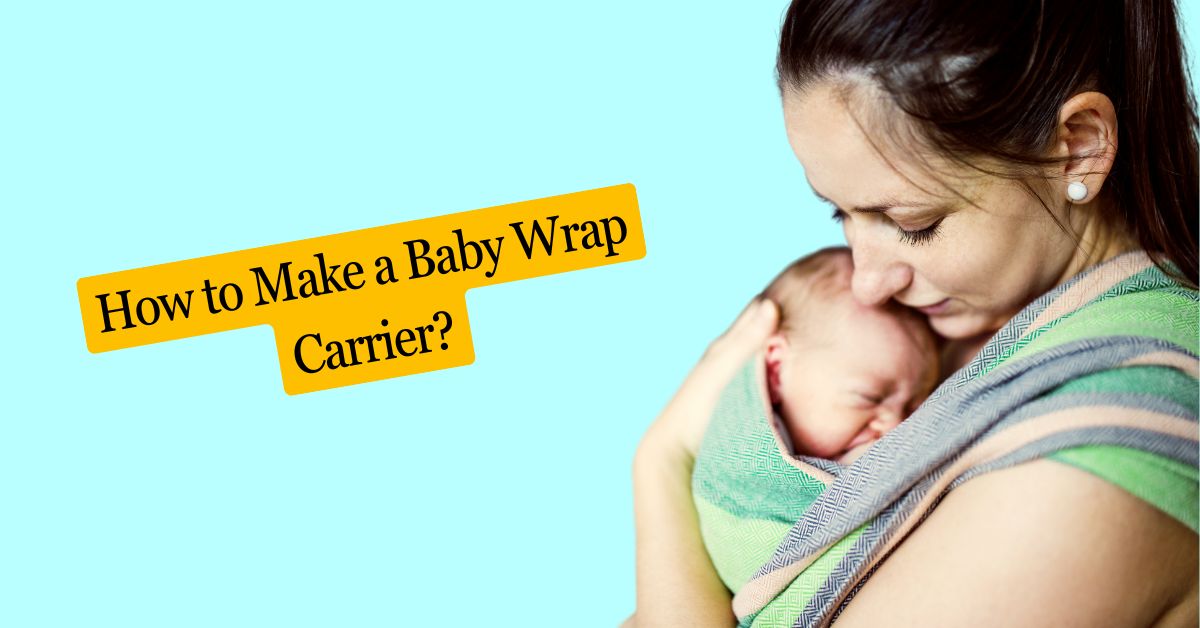
A baby wrap carrier is a simple and effective way to keep your little one close while freeing up your hands to get things done. Whether running errands, walking, or simply bonding with your baby, a wrap carrier provides comfort and security for you and your baby. While store-bought airlines can be expensive, making your own is a cost-effective and customizable solution.
With just a few materials and some easy steps, you can create a soft, supportive wrap carrier that fits your needs perfectly. In this guide, we’ll show you how to make a baby wrap carrier that’s easy to use, gentle on your baby, and great for everyday wear.
How to make a baby wrap carrier at Home
Below are the methods to make baby wrap carrier at home .
Important things to consider for Making a Wrap Carrier
Take a close look at these points before you start.
1. Wrap Sizing
The length of your wrap depends on your size and your child’s size. Standard wraps are typically 5 to 6 yards long. If you’ve used a wrap before, check the size of your previous one and decide based on where you like to tie it. For instance, tying in the front for sitting comfort may require an extra yard of fabric.
If you’re new to wraps, use a long string or yarn to mimic wrapping around your body, measure its length, and add an extra yard for flexibility.
Width: Most wraps are 20 to 30 inches wide. This is a personal preference, but ensure the width supports your baby from under their bottom to their neck. A finished wrap with a width of 20 inches is usually sufficient.
2. Fabric Selection
Key Factors:
Breathability: Allows airflow to keep you and your baby comfortable.
Moisture Wicking: Helps manage sweat by pulling moisture away from the skin.
Strength: The fabric must securely support your baby’s weight.
Recommended Fabrics:
Cotton: Breathable but may retain moisture.
Linen or Lyocell: Lightweight, sturdy, and both breathable and moisture-wicking.
For woven wraps, choose fabrics that don’t stretch except slightly along the bias. For stretchy wraps, ensure a maximum of 25% stretch to maintain security.
Tip: Test the fabric in-store by pulling and stretching it. Consider how it feels against the skin and if it’s sturdy enough to support your child for years.
3. Woven vs. Stretch Fabrics
Woven Wraps are more secure for heavier babies and long-term use. They are best for a Front Wrap Cross Carry (FWCC), which keeps your baby snug with a single fabric layer in warmer weather.
Stretchy Wraps are ideal for younger babies or cooler weather. They work well for a Pocket Wrap Cross Carry (PWCC) but rely on the stretch to form a snug fit.
4. How Much Fabric to Buy
If the fabric’s width is double or more of your wrap width:
Buy half the wrap length and cut it down the middle to make two rectangles, then sew them together.
Example: For a 6-yard wrap, buy 3 yards of fabric.
If the fabric’s width is less than double your wrap width:
Buy the full wrap length and trim the width as needed.
Example: For a 6-yard wrap, buy 6 yards of fabric.
5. Check the Fit with the TICKS Checklist
Tight: Ensure your baby is snug with no loose fabric.
In view at all times: You should always see your baby’s nose and ensure they can breathe.
Close enough to kiss: Your baby should be high enough for you to kiss their head quickly.
Keep the chin off the chest: Maintain space under the chin to prevent breathing restrictions.
Supported back: Your baby’s back should be slightly curved, with its bottom lower than its knees, forming an “M” shape.
Following these guidelines will create a functional and safe wrap carrier customized to your needs.
How to Make a Baby Wrap Carrier: Step-by-Step Guide
Baby wrap carriers are comfortable, versatile, and easy to customize for your preferences. This guide will help you make your own durable and safe wrap carrier.
Step 0: Prewash and Prepare the Fabric
Wash and dry your fabric as usual to remove sizing and pre-shrink it.
If the fabric frays easily (e.g., linen or loosely woven fabrics), use a quick basting stitch along the edges before washing.
Step 1: Cut the Fabric
Determine the length and width of your wrap based on your preferences and measurements (standard wraps are 5–6 yards long and 20–30 inches wide).
If your fabric is wide enough, you may only need to trim its width.
If using fabric less than twice the width of your desired wrap, cut it in half lengthwise to create two long rectangles.
To make cutting easier, fold the fabric neatly with the selvage edges aligned, and use the fabric’s natural fold as a guide for straight cuts.
Tip: If using one long, continuous piece of fabric, skip to Step 4.
Step 2: Sew the Fabric Together Using a French Seam
To join two long rectangles, use a French seam for durability and to prevent raw edges from fraying:
First Stitch: Place the wrong sides together and sew the short edges with a 1/4-inch seam allowance.
Trim and Press: Trim the seam close to the stitches, then fold the fabric so the right sides are together. Press the seam flat.
Encased Stitch: Sew the seam again, 1/2 inch from the folded edge, fully encasing the raw edge.
Step 3: Secure the Seam
Press the finished seam to one side of the fabric from the wrong side.
Topstitch it down along one side of the seam to secure it flat and ensure it won’t irritate the baby’s skin.
Step 4: Hem the Edges
To create a clean, durable finish around your wrap:
Fold and press the raw edge inward 3/8 inch.
Fold it again 1/2 inch and press to create a double-fold hem.
In corners, make a mitered finish:
At the first fold, tuck the corner inward to form a small triangle.
Fold the second hem over the triangle for a clean, neat edge.
Sew the double-fold hem in place using a straight stitch.
Step 5: Mark the Center
Locate the center of your finished wrap by folding it in half lengthwise.
Attach a small ribbon or piece of fabric or mark with permanent ink to make it easier to find the center when wrapping your baby.
Step 6: Wrap and Wear Your Baby
Practice a few wrapping methods to find the one that works best for you and your baby, such as:
Front Wrap Cross Carry (FWCC): Ideal for woven wraps. Provides snug support with a single layer of fabric over the baby.
Pocket Wrap Cross Carry (PWCC): Best for stretchy wraps. Creates a secure “pocket“ for the baby.
With these steps, you’ll have a custom-made, functional, and safe baby wrap carrier to keep your baby close and secure.
How to Make a Baby Wrap Without Sewing-Step-by-Step Instructions
Making a baby wrap without sewing is simple and cost-effective. You can create a safe and comfortable wrap for carrying your baby with just a few materials and minimal effort. Here’s how:
Materials Needed
Fabric: Purchase 5 yards of soft, stretchy fabric (polyester/spandex blends work well). Look for fabrics that feel soft and breathable but still have some stretch.
Scissors: A good pair of fabric scissors for cutting.
Step 1: Choose and Prepare Your Fabric
Select a fabric that is 50–60 inches wide. Stretchy knits work best as they don’t fray, so no hemming is required.
Wash and dry the fabric to pre-shrink and remove any chemical residues.
Step 2: Measure and Cut the Fabric
Lay the fabric flat on the floor or a large table, keeping it folded in half lengthwise (as it often comes on the bolt).
Smooth out any wrinkles and ensure the edges are aligned.
Measure and cut the fabric lengthwise down the center fold, creating two long strips. Each piece will be approximately 5 yards long and 25–30 inches wide, depending on the fabric’s original width.
Tip: Go slow and use long, even cuts to keep the edges clean.
Step 3: Find the Center of the Wrap
Fold one of the strips in half lengthwise to locate the exact center.
Mark this spot with a small piece of tape, ribbon, or even a marker. This will help you quickly find the center when wrapping.
Step 4: How to Wear the Wrap
Start at Your Waist:
Wrap the fabric around your waist, centering the middle mark at your front.
Bring Over Shoulders:
Bring one end of the wrap diagonally up and over your shoulder.
Repeat with the other side so the fabric forms an “X“ across your back.
Adjust the Waistband:
Tuck the two loose ends under the waistband at the front, pulling them downward.
Create an X at the Front:
Cross the two ends over each other at the front, creating another “X“ in front of your chest.
Wrap Around and Tie:
Bring the ends behind your back, cross them, and tie them securely in the front or back, depending on the length of your fabric.
Step 5: Place the Baby in the Wrap
Prepare the Fabric:
Use the “X“ in the front to position your baby, placing one leg through each loop of the “X.”
Adjust the fabric to support the baby’s bottom and back, spreading the fabric evenly over the body.
Secure the Baby:
Pull the horizontal waistband up and over the baby’s back for additional support.
Ensure the baby is snug, with their head supported and knees higher than their bottom.
Check Fit with the TICKS Checklist:
Tight: Baby should be snug against your chest.
In view at all times: You should see their face.
Close enough to kiss: Baby’s head should be close enough to kiss.
Keep chin off the chest: Ensure baby’s chin isn’t pressed against their body.
Supported back: Baby’s back should be naturally curved, with knees higher than their hips.
Step 6: Enjoy Your Baby Wrap!
This no-sew baby wrap is easy to use, affordable, and customizable to your fabric preferences. You’ll have a second wrap to gift or keep as a backup with the extra fabric you cut.
Pro Tip: Practice wrapping with a doll or stuffed animal before using it with your baby.
Now you have a simple, functional baby wrap carrier that costs a fraction of store-bought versions!
How to Make a Baby Wrap Out of a Bedsheet- Step-by-Step Instructions
You can transform a simple bedsheet into a functional baby wrap for emergency use or try babywearing before investing in a professional wrap. This method is quick, simple, and requires no cutting or sewing. Here’s how:
Materials Needed
Bedsheet: A twin-size bedsheet works best (larger sheets can be folded to size).
Your Baby: Ready to test out this wrapping method?
Step 1: Prepare the Bedsheet
Choose a twin-size sheet for easier handling.
Fold it lengthwise to create a long strip about 20–30 inches wide. (For larger sheets, fold until it feels manageable and not too bulky).
Step 2: Position the Sheet
Find the Center: Fold the sheet in half lengthwise and locate the center point.
Place Around Your Waist: Wrap the sheet around your waist, centering the middle point at your front. The rest of the fabric should hang evenly on both sides.
Step 3: Start Wrapping
Bring Ends Over Your Shoulders:
Bring one side of the sheet diagonally up and over your shoulder.
Repeat with the other side so that the fabric forms an “X“ across your back.
Secure the Waistband:
Tuck the two loose ends under the waistband at your front. Pull them through so they hang downward.
Create an X at the Front:
Cross the two ends over each other at the front to form another “X.”
Tie the Ends:
Wrap the ends behind your back again and tie securely in a double knot. Depending on the length of the sheet, you can tie the ends at your back or bring them back around to the front.
Step 4: Place Your Baby in the Wrap
Use the Front X:
Slide one of the baby’s legs through the first side of the “X“ and the other through the opposite side.
The baby should be seated in the cross, with their knees higher than their bottom.
Adjust the Fabric:
Spread the fabric across the baby’s back and bottom for even support.
Pull up the waistband portion to secure the baby’s back further.
Step 5: Ensure Safety
Use the TICKS Safety Checklist:
Tight: Ensure the wrap is snug against your body.
In view at all times: The baby’s face should be visible.
Close enough to kiss: You should quickly kiss the top of their head.
Keep chin off the chest: Baby’s chin should not press against their chest.
Supported back: The baby’s back should be naturally curved with their hips and knees in the “M“ position.
Why Use a Bedsheet Wrap?
Cost-Free Experiment: Try babywearing without investing in a wrap.
Emergency Use: Perfect for keeping your baby safe and your hands-free during unexpected situations.
Short Carries: A bedsheet is ideal for short, simple carries, providing sufficient support for everyday tasks.
With some practice, you can use a bedsheet to try babywearing and enjoy its benefits, even in emergencies!
How to Make a Baby Wrap Using a Blanket –Step-by-Step
You can turn a muslin blanket into a simple, effective baby wrap. This method is ideal for newborns or young babies and works well when you can’t access a commercial baby carrier.
Materials Needed
Muslin Blanket: Lightweight and breathable, perfect for wrapping.
Step 1: Fold the Blanket
Lay the muslin blanket flat.
Fold it in half diagonally to form a triangle.
Step 2: Position the Blanket Around Your Body
Place the top point of the triangle on one side of your waist.
Wrap the long edges of the triangle around your body:
One edge goes over your shoulder.
The other edge goes under your opposite arm, creating a sling.
Make sure the tip of the triangle ends up at your side.
Step 3: Secure the Wrap with a Knot
Tie a sailor’s knot (a secure knot with two layers) near your side:
Start by bringing one side over and under the other, creating the first knot.
Tie a second knot in the same way to secure it firmly.
Adjust the knot so it feels snug but comfortable.
Step 4: Adjust the Pouch for Your Baby
Tuck the tip of the triangle inside the wrap to form a pouch.
Ensure the pouch is tight enough to support your baby but allows for flexibility.
Step 5: Place Your Baby Inside
For Newborns:
Place your baby in a fetal tuck (legs curled up) inside the pouch.
For Older Babies:
Gently guide the baby’s legs through the sides of the pouch so they can hang out.
Adjust the fabric around the baby’s back, ensuring the body is well-supported.
Step 6: Check the Wrap
Use the TICKS Safety Checklist:
Tight: The wrap should feel snug and secure.
In view at all times: Your baby’s face should be visible.
Close enough to kiss: You should quickly kiss their head.
Keep chin off the chest: Ensure the baby’s airway remains open.
Supported back: The baby’s back should be straight, with their hips in an “M“ position.
Step 7: Adjust as Needed
Tug on the knot to tighten the wrap if necessary.
Ensure the fabric is evenly spread to distribute the baby’s weight comfortably.
To Remove the Baby
Untie or loosen the knot at your side.
Gently lift the baby out of the wrap.
This no-sew baby wrap method is convenient and easy to use, perfect for moments when you need a quick baby carrier!
How to Make a No-Sew Baby Wrap Carrier from T-Shirts
This DIY baby carrier is a quick, affordable way to carry your baby close to you without sewing. Using just three t-shirts and some yarn, you can create a comfortable and supportive baby wrap.
Materials Needed:
3 T-shirts (Cotton is a good choice for breathability and softness).
Yarn or Twine (Strong enough to support the baby’s weight).
Scissors.
Section 1: Making the Carrier
Step 1: Choose the Right T-shirts
Choose t-shirts that are in good condition. Avoid ancient ones that may be too stretched out.
Cotton tees work best for comfort and breathability. Wash new shirts with incredibly dark or bright colors to prevent dye transfer.
Step 2: Pick Out Your Yarn
Use strong yarn that will not stretch or pill. It should securely hold the weight of the baby.
Optionally, wrap the yarn in a soft cover (e.g., scrap fabric) to prevent irritation on your baby’s skin.
Step 3: Gather Your Supplies
You’ll need three T-shirts, yarn, and scissors. For comfort, ensure the T-shirts are your normal size or one size larger.
Step 4: Cut the T-shirts
Cut each t-shirt horizontally from armpit to armpit, creating three fabric tubes. You can save the top portions of the shirts for other projects.
Step 5: Tie the Tubes Together
Use the yarn to tie two fabric tubes together at the ends. Gather the yarn around both tubes to form a figure-eight shape. Tie securely and trim any excess yarn.
Step 6: Cut the Third Tube
Lay the third fabric tube flat. Starting at the top left corner, cut diagonally to the bottom right corner of the tube. This will create a comprehensive piece with two narrow flaps in front.
Section 2: Wearing the Carrier and Baby
Step 1: Put the Loops Over Your Head
Place the tied fabric loops over your head, allowing them to hang down to your waist. The tied section should form an “X“ on your back for stability.
Step 2: Position the Loops Over Your Shoulders
Place one loop over your left shoulder and the other over your right. This will help distribute the weight and keep the baby secure.
Step 3: Place Your Baby in the Carrier
Gently slide your baby down your chest, ensuring each leg is in a separate loop. Spread the fabric to avoid bunching and to support the baby’s weight evenly.
Step 4: Position Your Baby Correctly
Make sure the baby’s knees are above the bottom and bent comfortably. His legs should be spread apart to prevent hip issues.
You should be able to kiss the baby’s head without straining.
Step 5: Secure Your Baby’s Bottom
Use the third t-shirt piece to wrap around your baby’s bottom and lower back. Tie the ends around your waist for added support. This will also provide comfort for your own lower back.
Creating your baby wrap carrier can be a rewarding and practical project that saves you money while providing a comfortable, hands-free way to carry your baby. Whether you choose a no-sew method or decide to sew your wrap, it’s essential to prioritize safety and comfort. Use soft, breathable fabrics like cotton and ensure the wrap fits securely to keep your baby safe and happy.
With a bit of time and effort, you’ll have a personalized baby wrap ready for all your adventures!
Frequently Asked Questions (FAQ): How to Make a Baby Wrap Carrier?
1. How much fabric do I need to make a baby wrap?
To make a baby wrap, you’ll need approximately 5-6 yards of fabric, depending on your size and preference. A 5-yard length is typically sufficient for most people.
2. What kind of fabric is best for a baby wrap?
100% cotton fabric, such as Brocade, is famous for baby wraps. It is soft, breathable, and supportive. For woven wraps, fabrics like cotton, linen, or blends with a little stretch are ideal.
3. How wide should the fabric be for a baby wrap?
The fabric width for a baby wrap is about 28-32 inches. Depending on the fabric you purchase, you may need to trim it to the desired width.
4. Can I use a single piece of fabric for a wrap?
Yes, you can use a single piece of fabric for a wrap, and you will need to buy 6 yards of fabric for a 6-yard wrap. You can adjust the width as needed before sewing.
5. Do I need any special tools to make a baby wrap?
If you wish to finish the edges neater, you will need basic tools like scissors, measuring tape, and, optionally, a sewing machine.
6. Can I make a baby wrap with a no-sew method?
You can make a no-sew baby wrap by simply cutting fabric to size and tying the ends securely. No sewing machine is required for this method.
7. How do I ensure the wrap is safe for my baby?
Ensure the fabric is securely tied and your baby is positioned in a natural, supportive posture with their knees above their bottom. Always check that the wrap is comfortable for both you and your baby.
Hi, I’m Jane Doe— a mom, writer, and founder of Babybloomland, where I share real-life parenting insights, expert-backed guides, and honest reviews on all things baby and child-related.
As a mother of two (and a lifelong researcher at heart), I created this space to support other parents navigating the beautiful, messy, and ever-evolving journey of raising children. Whether you're searching for stroller tips, sleep routines, or first-time mom advice — you’ll find thoughtful, experience-driven content here to help you make confident, informed choices for your family.
Thanks for being here — let’s grow through parenthood together!